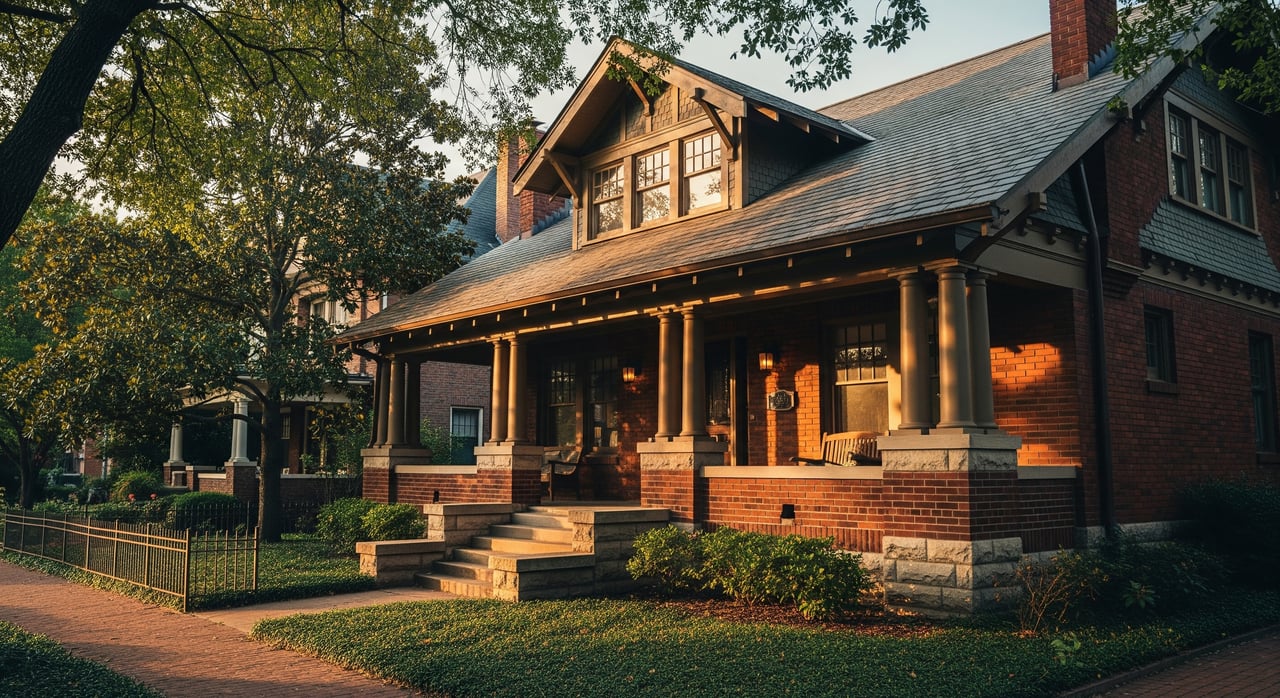
Can you tell a Craftsman from a Tudor on a quick walk down Peabody or in Cooper‑Young? If you are shopping in Midtown, you will see a mix of porch-forward bungalows, stately foursquares, and storybook revivals that each signal a different era and set of maintenance needs. You want the charm and the right facts so you can buy with confidence. In this guide, you will learn how to spot Midtown’s most common architectural styles, what to watch on showings, and what older-home ownership really involves. Let’s dive in.
Why Midtown looks this way
Midtown’s neighborhoods grew from the late 1800s through the 1930s and 1940s. Areas around Overton Park and along Poplar saw rapid development, including Central Gardens, Annesdale‑Snowden, Cooper‑Young, and Vollintine‑Evergreen. That timing is why you see so many bungalows, Craftsman details, foursquares, Tudor Revival cottages, and Colonial Revival homes on the same blocks.
Porches, sidewalks, and mature shade trees define the streetscape as much as the houses themselves. Several streets and districts include locally designated landmarks or historic districts. In those areas, exterior changes often require design review, and some homes may be eligible for technical guidance through preservation groups. Always verify local rules before planning exterior work.
Style guide: Midtown homes
Craftsman and Bungalow
- Era: about 1905 to 1930, with a peak in the 1910s and 1920s.
- What to spot: low to medium gabled roofs with wide eaves and exposed rafter tails. Broad front porches with square or tapered columns on masonry piers. Decorative brackets and paired windows, often with multi‑pane upper sashes.
- Typical materials: wood clapboard or shingles, brick or stone porch piers, wood windows and trim.
- Interiors: built‑ins like bookcases, dining nooks, and rich wood trim.
- Common changes and concerns: porch enclosures, vinyl window replacements, altered columns, foundation or porch settling, crawlspace moisture, and roof flashing issues where the porch meets the main roof.
American Foursquare
- Era: about 1895 to 1930.
- What to spot: a boxy two‑story form, low hipped roof with a central dormer, and a full‑width front porch. Floor plans often have four rooms per floor.
- Typical materials: brick or wood clapboard with Craftsman or Prairie details at eaves and porches.
- Common changes and concerns: enclosed or modified porches, interior partitions added or removed, rear additions, and chimneys that have been rebuilt or removed.
Tudor Revival
- Era: 1920s to 1940s.
- What to spot: steep, cross‑gabled roofs; decorative half‑timbering; tall, narrow windows; arched or heavy front entries; and prominent brick or stone chimneys.
- Typical materials: brick, stone, stucco, and half‑timber accents.
- Common changes and concerns: complex roofs need careful flashing, masonry repointing, stucco repairs, and window replacements that may remove leaded or casement windows.
Colonial Revival
- Era: late 1890s to 1950s in general; Midtown often 1910s to 1930s.
- What to spot: symmetrical facades, a centered entry with columns or a pediment, multi‑pane double‑hung windows, and side‑gabled roofs. Dutch Colonial variants have gambrel roofs.
- Typical materials: brick or wood clapboard.
- Common changes and concerns: siding replacement, modified porches, interior reconfigurations, and loss of original wood windows.
Late Victorian / Queen Anne
- Era: late 1800s to early 1900s.
- What to spot: asymmetry; towers or turrets; varied gables; ornate trim with spindles and brackets; patterned shingles; and wraparound porches.
- Typical materials: wood with decorative shinglework.
- Common changes and concerns: exterior trim repairs and repainting cycles, plus structural settling in older foundations.
Spanish/Mission and Mediterranean influences
- Era: 1920s to 1930s, less common in Midtown.
- What to spot: low‑pitched clay tile roofs, stucco walls, and arched openings.
- Typical materials: stucco and clay tile.
- Concerns: stucco maintenance and tile roof stability.
Quick ID checklist
Use multiple cues rather than a single detail. Start with these tells:
- Roof: pitch and shape. Low gable with wide eaves suggests Craftsman. Steep cross gables point to Tudor. Side gable with symmetry points to Colonial Revival.
- Porch: wide, open porches with chunky piers fit Craftsman and foursquare. Small arched entries show up on Tudor and Mediterranean‑style homes.
- Windows: multi‑pane uppers over single lowers are common on Craftsman. Tall, grouped casements or leaded glass lean Tudor. Evenly spaced double‑hung windows are typical for Colonial Revival.
- Facade: symmetry hints at Colonial Revival. A square two‑story mass with a dormer hints at an American Foursquare. Asymmetry and ornate trim can indicate Queen Anne.
What to watch on showings
Exterior checks
- Roof: note material, visible age, sagging, patched spots, and complex intersections like dormers or porch tie‑ins.
- Gutters and flashing: watch for standing water, detached sections, and weak spots around chimneys and valleys.
- Foundation and walls: look for cracks, bulging brick, mortar loss, and vegetation against the foundation.
- Porches: check for sagging, rot at columns or joists, altered foundations, and enclosed porches that block airflow.
- Chimneys: verify straightness, caps, and mortar condition.
- Siding and masonry: mismatched patches, wrong mortar type, and stucco cracks are clues.
- Windows and doors: original wood or later vinyl, painted‑shut sashes, rot, and storm windows.
- Drainage: yard slope away from the house and downspouts that carry water away.
Interior checks
- Floors and walls: sloping floors and diagonal cracks above doors can point to movement. Stains suggest leaks.
- Attic: insulation type and depth, ventilation, and signs of roof leaks.
- Crawlspace or basement: moisture, standing water, termite tubes, and clearance.
- Systems: panel age, presence of knob‑and‑tube wiring, HVAC age and location, and water heater age.
- Original features: mantels, built‑ins, and trim. Note condition and how much remains.
- Odors: musty smells can indicate moisture. Sharp chemical smells can mask issues.
Yard and site
- Trees near the foundation, driveway runoff, and historic sidewalks or stonework that may need care.
High‑priority red flags
- Major structural movement, especially doors that do not close or wide foundation cracks.
- Active water intrusion, including visible mold or efflorescence.
- Termite or wood‑destroying insect activity. Ask for current reports.
- Old knob‑and‑tube or aluminum wiring, and undersized or overloaded panels.
- Possible sewer line problems. Consider a camera inspection if backups or large trees are present.
- Potential asbestos and lead paint in pre‑1978 homes. Get cost estimates for remediation.
- Unpermitted changes. Check city permit history to avoid financing or insurance issues.
Inspections and permissions
- Start with a comprehensive home inspection by a licensed professional.
- Add specialists as needed: structural engineer, pest control, sewer scope, HVAC and chimney, and an electrical evaluation for older wiring.
- Verify whether the home lies in a local or National Register historic district. Exterior changes in local districts usually require review by the City of Memphis Landmarks Commission. Build that timing into your project plan.
- Historic incentives can be program‑specific. Federal rehabilitation tax credits generally apply to income‑producing properties. For residential homes, check with the Tennessee Historical Commission and local preservation groups for any guidance or programs. Do not assume credits apply without verification.
- Renovation financing may include options like FHA 203(k) or Fannie Mae HomeStyle Renovation. Confirm requirements with your lender for older or historic homes.
Owning and updating older homes
First fix: water and structure
- Roofs and flashing are frequent sources of damage. Prioritize correct flashing at valleys, dormers, chimneys, and porch connections.
- Manage water at the site. Keep gutters clear and downspouts aimed away from the foundation. Improve grading where needed.
- Address foundation issues with qualified pros. Moisture control in crawlspaces is key.
Windows and energy performance
- Original wood windows can often be repaired. Sash repairs, weatherstripping, and storm windows improve comfort while keeping the look that buyers expect in historic neighborhoods.
- Add insulation in attics and crawlspaces first. Wall insulation is more invasive and best planned during renovations.
- Consider efficient HVAC solutions. Mini‑splits can serve tough rooms where ductwork is difficult.
Masonry and stucco care
- Repoint brick with mortar compatible with historic materials. Hard modern mortars can harm old brick.
- Match stucco repairs to the original profile and mix to avoid future cracking.
Porches and exterior woodwork
- Porches are defining features and complex to restore. Prioritize structure, then match original profiles.
- Expect cyclical repainting for exterior trim. Paint protects against moisture and rot.
Costs and contractors
- Historic‑sensitive repairs, like window sash restoration or matched mortar, often cost more than modern replacements. Get multiple bids and look for contractors experienced with older homes.
Document and plan
- Photograph and measure before work begins. Good records support design review and help future owners.
- Keep major historic spaces intact when updating kitchens and baths. Reversible changes preserve character and options for future incentives where applicable.
Local resources
- City of Memphis Division of Planning and Development and the Landmarks Commission for historic‑district rules and permits.
- Memphis Heritage for neighborhood histories, contractor references, and technical guidance.
- Tennessee Historical Commission for state and federal program information and the National Register process.
- Neighborhood associations such as Central Gardens, Cooper‑Young, and Vollintine‑Evergreen for local histories and norms.
A smart buying workflow
- Do preliminary research on the home’s age and any historic‑district status.
- Tour with the checklist in hand and photograph potential issues.
- Write offers with contingencies for inspections, including termite, sewer, and structural if needed.
- If you plan exterior changes in a historic district, speak with the Landmarks Commission early.
- Get at least two bids from experienced contractors for major items like roofs, foundations, porches, masonry, and window restoration.
- Budget a contingency for surprises. Many renovators set aside 10 to 20 percent of the renovation budget.
When you are ready to focus your search, align style with your lifestyle and maintenance goals. If you value front‑porch living and original woodwork, a Craftsman bungalow may fit. If you need more vertical space and a classic presence, the foursquare or Colonial Revival may suit you better. Ready to explore Midtown with a clear plan? Reach out to Carrie Benitone for local guidance grounded in analysis and results.
FAQs
What architectural styles are most common in Midtown Memphis?
- You will most often see Craftsman bungalows, American Foursquares, Tudor Revival cottages, and Colonial Revival homes, with occasional Late Victorian and Mediterranean‑influenced examples.
How do historic‑district rules affect Midtown renovations?
- In locally designated districts, exterior changes typically require design review by the City of Memphis Landmarks Commission, so factor that timing and process into your plans.
What inspections are most important for older Midtown homes?
- Prioritize a full home inspection plus termite, sewer scope, and electrical evaluations; add a structural engineer, HVAC, and chimney inspections if conditions suggest.
Are original wood windows worth keeping in Midtown houses?
- Yes, many are repairable with sash work and weatherstripping, and storm windows improve performance while maintaining the historic look that supports resale appeal.
What financing options help with Midtown renovations?
- Ask lenders about renovation loans such as FHA 203(k) or Fannie Mae HomeStyle, and verify any historic‑related programs with the Tennessee Historical Commission before you plan budgets.
