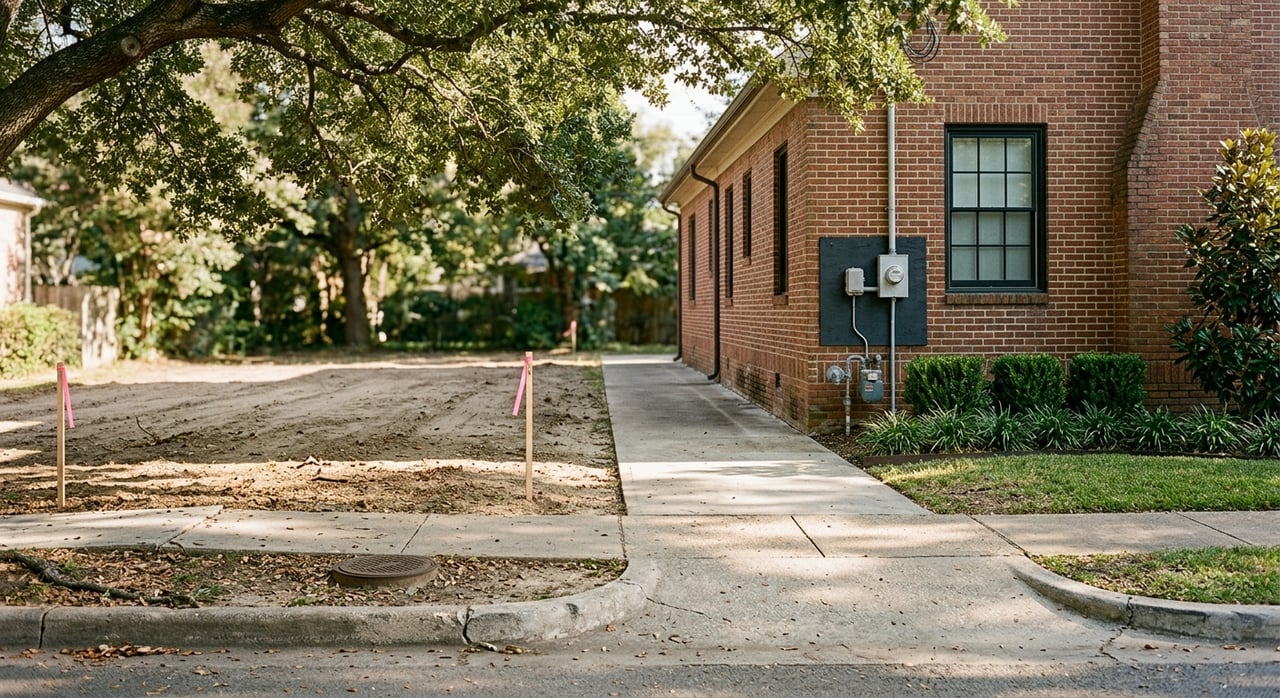
Thinking about buying a small development site in East Memphis? This is where a deal can look simple on paper but get complicated fast once you dig into zoning, access, utilities, drainage, and flood risk. If you want to avoid expensive surprises, you need to know what to check before you make an offer. Let’s dive in.
Why small sites are different
In East Memphis, small development sites are rarely judged by acreage alone. A parcel may look appealing on a map, but what really matters is whether it can support your intended use after you account for approvals, site layout, and infrastructure.
The City of Memphis directs applicants to Develop 901 for planning and zoning approvals, engineering permits, construction permits, contractor registration, inspections, zoning atlas access, property lookup, and permit history. The city also describes its zoning atlas as an interactive, multi-layered parcel map, which makes it a useful starting point for site review.
The bigger point is this: a site is not automatically buildable just because it is vacant or because it seems large enough. The Memphis and Shelby County Unified Development Code governs zoning and subdivision regulations for the City of Memphis and unincorporated Shelby County, so small-site feasibility often depends on code details rather than assumptions.
Start with zoning first
Before you think about pricing, design, or timing, ask one question: does your intended use fit the current zoning? In Memphis and Shelby County, residential standards vary by district, and the rules can change based on site area, average lot area, frontage, height, setbacks, and sometimes alley access.
For a small infill parcel, the buildable envelope can matter more than the total lot size. In other words, a site may have enough square footage overall but still leave too little usable area once district standards are applied.
That is why zoning review should happen at the front end of your diligence. If the use is not clearly allowed by right, the timeline and risk profile of the deal can change quickly.
When a site is not a clean fit
If your plan does not fit the zoning as-is, you may need formal review. The Board of Adjustment handles variances, conditional use permits, appeals of staff interpretation, limited zoning boundary extensions, and nonconforming-use permits.
The Land Use Control Board handles zoning map changes, zoning text changes, planned developments, special use permits, street closures, and area or neighborhood plans before those items move forward for city or county action. That means even a modest change in site use or layout can become part of a longer entitlement process.
For buyers, this matters because entitlement is not an after-closing detail. It is often the factor that decides whether the site works at all.
Platting and resubdivision matter
A small site purchase often involves more than a simple transfer of land. If you are planning a lot split, resubdivision, or a redesign for a different housing type, that should be treated as part of the entitlement path from the beginning.
Many buyers underestimate this step and focus only on zoning labels. In practice, platting and subdivision issues can affect timing, design flexibility, and whether construction can begin when you expect.
This is one reason early coordination is so valuable. A site that looks workable during a quick review can stall later if the platting path was never properly considered.
Access can make or break the site
Access is one of the earliest practical tests for a small development parcel. Shelby County requires a driveway permit to install a driveway from a public roadway, and that permit is meant to address line-of-sight and stormwater requirements.
If the driveway crosses a drainage ditch or requires curb-and-gutter work, County Engineering sets pipe specifications and inspects forms before concrete is poured. The county also states that driveway, floodplain development, and right-of-way construction permits are applied for through Develop 901.
For you as a buyer, that means a site needs more than road frontage on paper. You need to understand whether a legal driveway or curb cut can actually be approved and built without major added cost.
Questions to ask about access
- Does the parcel have direct frontage on a public roadway?
- Will a new driveway permit be required?
- Could stormwater conditions affect driveway design?
- Is curb-and-gutter work likely?
- If there is a ditch, will pipe installation be needed?
These are not minor details. On a small site, access design can reshape the whole project footprint.
Utility availability needs verification
Utilities are another area where assumptions can become expensive. In Memphis and Shelby County, MLGW coordinates utility construction through Customer Engineering, and the Builder Services Center serves as the single point of contact for builders.
According to MLGW, Residential Engineering handles subdivisions and private developments. MLGW also notes that it is the only entity that can assign addresses in Memphis and Shelby County, which makes address verification part of the process for new construction.
The new-construction utility process includes site approval, address verification, a utility work request, design, inspections, and final inspection before meters can be set. So when you evaluate a site, it is not enough to ask whether utilities are nearby. You also need to understand what design, review, and inspection steps may still be required.
Older sites need extra water line review
If you are looking at an older parcel or redevelopment opportunity, water service lines deserve special attention. MLGW states that the water service line is a shared responsibility between MLGW and the homeowner, and it has been replacing lead service lines since 2012, including a 2024 to 2025 pilot for full line replacement.
That does not mean every older site has a problem, but it does mean you should not assume the existing water setup is ready for your project. Early verification can help you budget more accurately.
Drainage is not a side issue
In small-site deals, drainage is often one of the most overlooked risks. Shelby County Engineering states that proper drainage is a particular concern and may require site visits to determine whether drainage is public or private.
The county also notes that stormwater management under NPDES is a mandate. Its stormwater program covers both construction-site runoff control and permanent stormwater management for new development and redevelopment.
This is especially important now because the Memphis-Shelby County Stormwater Management Manual 3.0 became effective on February 1, 2025 for new development applications. If you are buying with plans to build, your site review should account for current stormwater standards, not outdated assumptions.
Why drainage changes the numbers
Drainage affects more than engineering drawings. It can reduce usable area, increase site-work costs, change driveway design, and alter the placement of structures and parking.
On a small parcel, even modest drainage constraints can have an outsized impact. That is why drainage should be part of your initial underwriting, not a late-stage check.
Check flood risk directly
Flood risk is another critical filter. FEMA states that its Map Service Center is the official source for effective flood maps, amendments and revisions, Letters of Map Change, and NFHL data, and that the address search tool is the public entry point for locating the applicable regulatory map for a specific parcel.
For a buyer, this is a straightforward but essential step. If flood-related restrictions affect the site, they can reduce buildable area, complicate permitting, or change the cost of development.
The key is to check flood risk early, before your contract becomes expensive. Waiting too long can leave you committed to a site that no longer fits your numbers.
Five questions before you make an offer
When you are evaluating a small development site in East Memphis, these are the core questions to answer first:
- What is the current zoning, and does your intended use fit without a variance, conditional use permit, or other formal review?
- How much buildable area remains after setbacks, easements, drainage constraints, and any flood-related restrictions?
- Can a legal driveway or curb cut be approved and built without expensive reconstruction?
- Are water, sewer, electric, and gas available, and will MLGW require address assignment, utility design, inspections, or service-line work?
- Will the project need platting, resubdivision, or a site-plan path before construction can begin?
If you cannot answer these clearly, you may not yet know what the site is really worth.
Why local coordination matters
Small-site deals in East Memphis often require several reviews at the same time. Zoning, access, drainage, utilities, permit history, and flood exposure can all affect one another.
That is where a local land-focused real estate advisor can add real value. Pulling parcel data from the zoning atlas and property lookup, checking permit history, and identifying likely entitlement issues early can save you time and help you avoid tying up capital in a site that is not a fit.
In practice, these deals move best when the right people are aligned early. Coordination among the agent, civil engineer, surveyor, title professional, and land-use attorney can help you see the full picture before you commit.
A smarter way to approach East Memphis land
Buying a small development site in East Memphis can be a strong opportunity, but only if you treat due diligence as part of the investment strategy. The best deals are not always the biggest parcels or the cheapest ones. They are the sites that fit your intended use, clear the entitlement path, and make sense once access, utilities, drainage, and flood risk are fully understood.
If you are weighing a site and want a clear, data-driven review before you move forward, local market knowledge matters. Working with someone who understands both the numbers and the practical approval path can help you make a more confident decision. If you’re considering a land purchase in East Memphis, Carrie Benitone can help you evaluate the opportunity with a thoughtful, informed approach.
FAQs
What should you check before buying a small development site in East Memphis?
- You should confirm zoning, buildable area, access, utility availability, drainage conditions, flood risk, and whether platting or formal entitlement review will be required.
How do you research zoning for an East Memphis parcel?
- The City of Memphis directs applicants to Develop 901 for zoning atlas access, property lookup, permit history, and planning and zoning approvals, which makes it a key starting point for parcel research.
Can driveway access delay an East Memphis development site?
- Yes. Shelby County requires a driveway permit for access from a public roadway, and site conditions such as drainage ditches, line-of-sight issues, or curb-and-gutter work can affect approval and cost.
Who handles utility setup for new construction in Memphis and Shelby County?
- MLGW coordinates utility construction through Customer Engineering, with the Builder Services Center as the single point of contact for builders, and MLGW also handles address assignment.
Why is drainage important for small development sites in East Memphis?
- Drainage can affect usable site area, stormwater compliance, driveway design, development cost, and whether a parcel is practical for your intended project.
How do you check flood risk for a property in East Memphis?
- FEMA states that the Map Service Center is the official source for effective flood maps and related flood data, and its address search tool is used to locate the applicable regulatory map for a parcel.
